
How to Find a Reliable Freelance Web Developer Without Getting Scammed
6 min
Freelancing
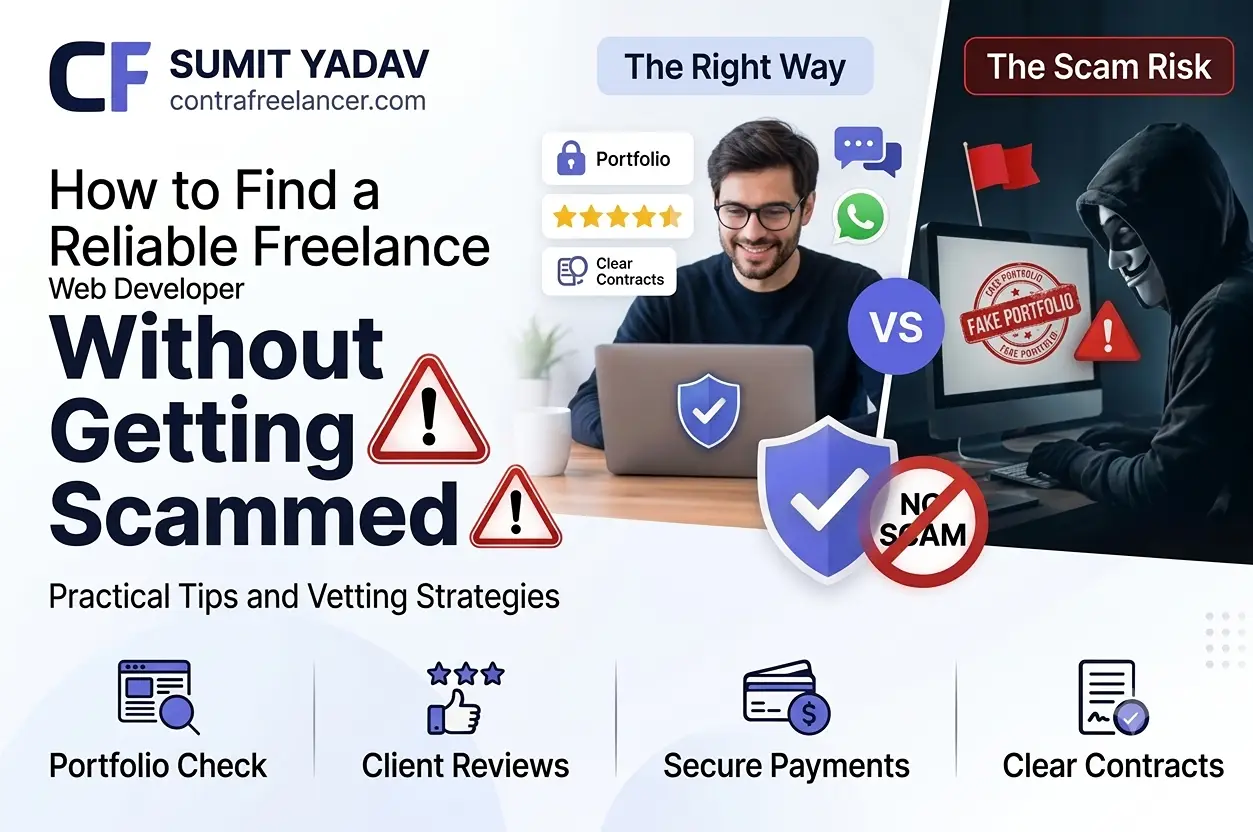
Hiring a freelance web developer can be a great way for a small business, startup, or growing company to build or improve a website without committing to a large agency. But finding the right developer requires more than simply choosing the person with the lowest quote.
Freelance developers have different levels of experience, technical skills, communication styles, pricing models, and project processes. Unfortunately, businesses can also run into developers who overpromise, disappear during a project, use low-quality templates, or provide unclear pricing.
The good news is that you can reduce these risks by knowing what to check before hiring.
This guide explains how to find a reliable freelance web developer, what questions to ask, what warning signs to watch for, and how to structure your project so both sides have clear expectations.
1. Define Your Website Requirements First
Before searching for a developer, write down what you actually need.
For example, determine whether you need:
A basic business website
A WordPress website
An ecommerce store
A custom web application
A membership website
A booking system
Website redesign
Website maintenance
Custom integrations
Ongoing development support
You should also identify the approximate number of pages, required features, integrations, content requirements, and whether you already have branding and designs.
The clearer your requirements are, the easier it becomes to compare developers accurately.
If you're unsure whether your project needs a simple website or something more advanced, understanding the difference between custom websites and templates can help you make an informed decision.
2. Check Their Real Portfolio
A portfolio is one of the first things you should review before hiring a freelance developer.
But don't only look at screenshots.
Ask yourself:
Can I visit the actual websites?
Are the websites still live?
Do they work properly on mobile?
Does the developer explain what they actually built?
Are multiple projects available?
Do the projects match my type of business?
Does the portfolio show real development work rather than only design mockups?
A developer who has worked on websites similar to yours may already understand common requirements and potential problems.
For example, if you're building an ecommerce website, look for evidence of ecommerce development rather than hiring someone whose portfolio only contains basic brochure websites.
3. Verify Their Technical Experience
“Web developer” can mean many different things.
One freelancer might specialize in WordPress, while another focuses on React, PHP, Shopify, WooCommerce, or full-stack applications.
Ask the developer which technologies they use and why those technologies are appropriate for your project.
Depending on your requirements, you may need experience with technologies such as:
WordPress
WooCommerce
PHP
JavaScript
React
Node.js
Shopify
MySQL
REST APIs
Third-party integrations
Cloud hosting
Don't automatically assume that knowing more technologies makes someone a better choice. What matters is whether their experience matches your project's requirements.
4. Don't Choose a Developer Only Because They Are Cheap
Price is important, especially for startups and small businesses, but the lowest quote isn't always the lowest overall cost.
A very low quote may leave out important work such as:
Responsive development
SEO setup
Security configuration
Testing
Performance optimization
Content migration
Analytics
Deployment
Post-launch support
Before comparing prices, make sure you are comparing similar deliverables.
If you want to understand typical website pricing, you can also review our guide on how much a website costs for a small business in 2026.
5. Ask for a Detailed Project Scope
One of the easiest ways to avoid misunderstandings is to create a written project scope before development starts.
The scope should explain:
Number of pages
Features
Design responsibilities
Development responsibilities
Content responsibilities
Third-party integrations
Mobile responsiveness
Browser compatibility
SEO requirements
Testing
Launch process
Number of revisions
Post-launch support
For example, “build an ecommerce website” is too vague.
A better scope might specify:
Build a responsive WooCommerce website with 15 product pages, product filtering, payment gateway integration, shipping configuration, contact forms, analytics, basic technical SEO, and deployment to the client's hosting account.
The more specific the scope, the fewer opportunities there are for disagreements later.
6. Discuss the Payment Structure Before Starting
Never begin a substantial freelance project without agreeing on payment terms.
Common models include:
Fixed Price
You agree on a total project price before development begins.
This can work well when the requirements are clearly defined.
Hourly
The developer charges according to the time spent working on the project.
This can be useful when requirements may change during development.
Milestone-Based
The project is divided into stages, with payments made after specific milestones.
For larger projects, milestone payments can make it easier for both the client and developer to manage progress.
Whatever model you choose, make sure the payment schedule is written down.
7. Don't Pay the Entire Amount Upfront
For a significant project, paying 100% upfront can create unnecessary risk.
Instead, consider using a milestone structure such as:
Project planning and kickoff
Design or initial development
Main development
Testing and revisions
Final deployment
The exact payment percentages can vary depending on the project.
The important part is that payments should correspond to clearly defined stages of work.
8. Check How They Communicate
Technical ability isn't the only thing that matters.
A developer can be highly skilled but still difficult to work with if they don't communicate clearly.
Before hiring, notice:
How quickly do they respond?
Do they understand your requirements?
Do they ask useful questions?
Do they explain technical issues clearly?
Do they provide realistic timelines?
Do they communicate project delays?
Do they document important decisions?
Good communication can prevent many project problems before they happen.
9. Ask About the Development Process
A reliable freelancer should be able to explain how they normally handle a project.
A typical process may include:
Discovery → Planning → Design → Development → Testing → Client Review → Launch → Support
Ask what happens at each stage.
For example:
Where will development happen?
Will you receive a staging website?
How will revisions be handled?
Who provides website content?
How will bugs be reported?
How will the final website be transferred?
What happens after launch?
If the developer cannot explain their process clearly, you should ask additional questions before committing.
10. Make Sure You Own Your Website and Accounts
This is an important point that businesses sometimes overlook.
The client should generally have appropriate access to important project assets and accounts, including:
Domain
Hosting
Website CMS
Source code
Database
Analytics
Business email
Payment accounts
Third-party services
You should know where your website is hosted and how you can access it.
Avoid situations where one freelancer is the only person who controls every account related to your business.
11. Ask About Website Security and Backups
A website isn't finished simply because it looks good.
Ask the developer how they handle:
Backups
Security updates
Plugin updates
Password management
SSL
Malware protection
Database backups
Recovery procedures
This is particularly important for WordPress websites because outdated plugins, themes, and software can create security and maintenance issues.
If you're planning ongoing maintenance, it's also useful to understand the typical WordPress website maintenance costs in the USA.
12. Be Careful With Unrealistic Promises
Be cautious if a developer promises things such as:
“Your website will rank #1 on Google.”
“I'll build everything in two days.”
“You'll get unlimited features for this price.”
“You don't need a contract.”
“SEO is guaranteed.”
“You don't need to worry about backups.”
“I'll handle everything, just send me the full payment.”
Web development and SEO involve many variables.
A professional developer should explain what they can control, what depends on third-party services, and what is outside the project's scope.
13. Ask for References or Client Feedback
If possible, look for independent evidence of previous work.
This could include:
Client testimonials
Public reviews
Case studies
Live websites
Professional profiles
Long-term client relationships
Don't rely exclusively on testimonials displayed on the developer's own website.
The goal isn't simply to find someone with hundreds of reviews. Instead, look for evidence that the developer has successfully completed projects similar to yours.
14. Start With a Smaller Project When Appropriate
If you're uncertain about working with a freelancer, you don't necessarily need to begin with a large project.
You could start with something smaller, such as:
A landing page
Website bug fixes
WordPress maintenance
A small feature
Website speed optimization
A redesign of one section
This gives you an opportunity to evaluate their:
Communication
Technical ability
Reliability
Attention to detail
Ability to meet deadlines
If the collaboration works well, you can move forward with a larger project.
15. Understand the Difference Between a Freelancer and an Agency
Freelancers and agencies can both be suitable depending on the project.
A freelancer may provide direct communication with the person doing the development, while an agency may have separate designers, developers, project managers, and other specialists.
If you're comparing the two, our guide on freelance developer vs agency in the USA explains some of the differences businesses should consider.
The important thing is to evaluate the actual project requirements rather than choosing solely based on the label.
16. Use a Written Agreement
A written agreement protects both the client and the developer.
It should ideally cover:
Project scope
Deliverables
Pricing
Payment schedule
Timeline
Revisions
Ownership
Confidentiality
Cancellation terms
Support
Maintenance
Change requests
For larger projects, clearly defining these terms becomes even more important.
A contract doesn't mean that you don't trust the developer. It simply makes expectations clear for everyone.
17. Watch for These Red Flags
Before hiring a freelancer, be cautious if you notice several of these warning signs:
🚩 No Real Portfolio
They cannot provide examples of websites they've actually built.
🚩 Extremely Low Quote
Their price is dramatically lower than other comparable proposals without a clear reason.
🚩 Guaranteed Google Rankings
They promise specific search rankings without explaining the variables involved.
🚩 Full Payment Immediately
They insist on receiving the entire project fee before any meaningful work begins.
🚩 No Written Scope
Everything is based on informal conversations with no documented deliverables.
🚩 Poor Communication
They regularly disappear or take an unreasonable amount of time to respond before the project has even started.
🚩 No Ownership Plan
They cannot clearly explain who will control the domain, hosting, website files, or accounts after completion.
🚩 No Testing Process
They don't explain how the website will be tested before launch.
One red flag alone doesn't necessarily prove that a developer is unreliable. Look at the overall pattern and ask questions before making a commitment.
18. A Simple Checklist Before Hiring
Before you hire a freelance web developer, make sure you can answer “yes” to most of these questions:
Have I seen their actual work?
Does their experience match my project?
Do I understand exactly what they're going to build?
Is the scope written down?
Is the pricing clear?
Is the payment schedule clear?
Do I understand the timeline?
Do I know who owns the website?
Will I have access to important accounts?
Have we discussed revisions?
Is post-launch support defined?
Do I understand how changes will be charged?
Have we discussed security and backups?
Am I comfortable with their communication style?
If several answers are unclear, resolve those issues before starting development.
Final Thoughts
Finding a reliable freelance web developer isn't simply about finding the cheapest quote or the most impressive portfolio.
The better approach is to evaluate the developer's relevant experience, portfolio, communication, project process, pricing, documentation, ownership arrangements, and support together.
Start with clear requirements, compare proposals based on deliverables rather than price alone, use a written agreement, and avoid making large commitments before you understand exactly what you're getting.
A good freelance development relationship should have clear expectations on both sides. When the project scope, communication, payments, ownership, and responsibilities are established from the beginning, you can significantly reduce the chances of costly misunderstandings.
If you're still researching what type of developer or development service your business needs, you can also explore our guides on how to hire a freelance web developer in the USA and choosing the right freelance web developer for your business.