

How Much Does a Website Cost for a Small Business in 2026?
6 min
Freelancing
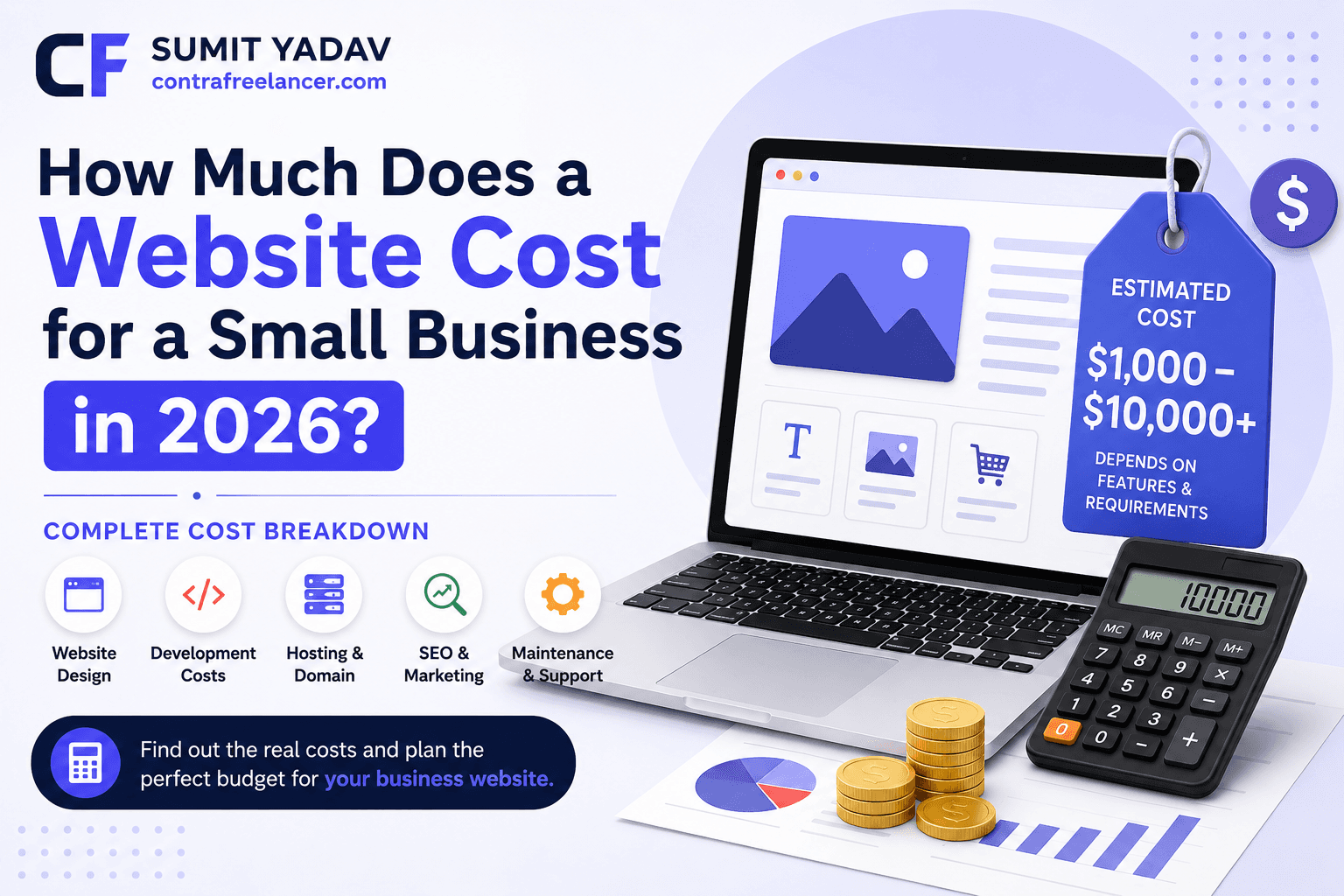
For a small business, a professional website can cost anywhere from $1,000 to $10,000+ in 2026, depending on the number of pages, design requirements, functionality, platform, SEO needs, and development approach.
A simple informational website may cost much less, while an ecommerce store, custom website, or website with advanced integrations can require a significantly larger investment.
The important thing is that there is no single fixed price for a business website.
A five-page website for a local contractor and a 20-page website for a growing ecommerce company may both be called "small business websites," but their development requirements can be completely different.
If you want a broader breakdown of website development pricing in the United States, see our guide to Cost of Website Development in USA 2026.
In this guide, we'll explain what a small business website typically costs in 2026, what affects the price, and how to choose the right option for your business.
Quick Answer: How Much Should a Small Business Spend on a Website?
Here is a practical estimate for 2026:
Website Type | Typical Cost |
|---|---|
DIY Website | $200 – $1,500+ |
Basic Business Website | $1,000 – $3,000 |
Professional Business Website | $3,000 – $8,000 |
Custom Business Website | $5,000 – $15,000+ |
Ecommerce Website | $3,000 – $15,000+ |
Custom Web Application | $10,000 – $50,000+ |
These are planning ranges rather than fixed market prices. Your actual cost can be lower or higher depending on the scope of your project.
For example, a website requiring custom animations, advanced forms, CRM integrations, membership functionality, or ecommerce features will generally cost more than a simple brochure-style website.
What Does a Basic Small Business Website Cost?
A basic small business website typically includes around 5–10 pages.
Common pages include:
Home
About
Services
Individual service pages
Contact
FAQ
Blog
Privacy Policy
For a simple business website, a realistic development budget can be around $1,000–$3,000.
This type of website is often suitable for:
Local businesses
Contractors
Consultants
Freelancers
Small professional service companies
Startups
Local agencies
The primary objective is usually to establish credibility, explain services, and generate leads.
However, a low-cost website shouldn't mean a low-quality website. Mobile responsiveness, basic SEO, fast loading times, clear calls to action, and professional content still matter.
What Does a Professional Small Business Website Cost?
A professionally designed business website generally requires a larger investment.
A typical budget can range from approximately $3,000 to $8,000, depending on the project.
This may include:
Custom UI/UX design
Responsive development
WordPress or Webflow development
Custom page layouts
CMS/blog setup
Contact and lead-generation forms
Basic technical SEO
Analytics setup
Search Console setup
Image optimization
Performance optimization
Security configuration
Testing across devices
For established small businesses, this range can make sense because the website isn't just an online brochure—it becomes part of the company's sales and marketing system.
If you're unsure whether you need a custom design or a pre-built template, our guide on the difference between a custom website and a template explains the main differences in flexibility, branding, and long-term value.
How Much Does an Ecommerce Website Cost?
Ecommerce websites typically cost more than standard business websites because they require additional functionality.
A small ecommerce website can start around $3,000–$5,000, while more customized ecommerce projects can reach $10,000–$15,000 or more.
Features that can increase development costs include:
Product variations
Product filtering
Shopping cart
Checkout
Payment gateways
Shipping integrations
Tax configuration
Inventory management
Customer accounts
Subscription products
Discount systems
Custom product options
Third-party integrations
Platforms such as Shopify provide many ecommerce features out of the box. As of July 2026, Shopify's official U.S. pricing lists Basic at $39/month when paid monthly or $29/month when billed yearly, with higher tiers available for growing businesses.
However, the platform subscription is only one part of the total ecommerce budget. Design, development, product setup, customization, content, apps, and ongoing marketing can add to the overall cost. If you're planning an online store, you can also read our guide on finding an experienced freelancer for ecommerce websites in the USA.
What Factors Affect Small Business Website Cost?
The number of pages is only one factor.
Two websites with the same number of pages can have completely different development costs.
Here are the biggest factors.
1. Number of Pages
A five-page website is generally less expensive than a website containing:
20 service pages
Location pages
Case studies
Resource pages
Blog categories
Team profiles
Multiple landing pages
More pages require additional design, content, development, testing, and SEO work.
2. Custom Design vs Template
One of the biggest pricing differences is whether you use a template or create a custom design.
Template-Based Website
A template can provide:
Faster development
Lower initial cost
Pre-designed layouts
Easier setup
This can be appropriate for businesses with simple requirements.
Custom Website
A custom website provides:
Unique branding
Custom layouts
Better control over user experience
More flexibility
Custom functionality
Greater scalability
A custom website usually costs more because every major design and development component requires additional work.
Which Platform Should a Small Business Choose?
Your website platform can also affect the overall cost.
Common choices include WordPress, Webflow, Shopify, and custom development.
WordPress
WordPress can be a strong choice for:
Service businesses
Blogs
Local businesses
Content-heavy websites
Companies requiring custom functionality
It offers a large ecosystem of themes and plugins and can be customized extensively.
If you're comparing platforms, see our detailed WordPress vs Webflow comparison.
Webflow
Webflow can be a good fit for:
Marketing websites
Design-focused businesses
Startups
Agencies
Businesses wanting strong visual control
The right choice depends on your content requirements, integrations, maintenance preferences, and long-term goals.
Shopify
Shopify is primarily designed for ecommerce businesses and includes tools for products, inventory, checkout, sales channels, and analytics.
Custom Development
A custom application may be appropriate when your business requires functionality that standard CMS platforms cannot efficiently provide.
Examples include:
Customer portals
Custom dashboards
Complex booking systems
Advanced databases
SaaS platforms
Custom marketplaces
API-driven applications
For businesses considering custom development, our guide on why hiring a full-stack freelance developer can be a smart move in 2026 provides additional information.
How Much Does Website Design Cost?
Website design is sometimes included in the development quote and sometimes priced separately.
A simple template customization may cost relatively little, while a completely custom UI/UX design can require significantly more time.
Professional website design may include:
Wireframes
User flows
Homepage design
Service page designs
Mobile layouts
Typography
Color system
Design components
Interactive elements
Conversion-focused layouts
Good design isn't simply about making a website look attractive.
It should also make it easier for visitors to understand your services and take action.
For more information, read How a Good Website Design Boosts Your Conversions.
How Much Does SEO Add to Website Cost?
SEO can affect both the initial development cost and the ongoing marketing budget.
A website built with SEO in mind may include:
Keyword research
SEO-friendly URLs
Title tags
Meta descriptions
Heading structure
Internal linking
Image optimization
Schema markup
XML sitemap
Robots.txt
Mobile optimization
Page speed optimization
Search Console setup
SEO shouldn't be treated as something you add after the website is finished.
Google's current guidance says the same fundamental SEO best practices continue to apply to AI features such as AI Overviews and AI Mode, including crawlability, internal linking, useful content, page experience, and structured data.
Website Design and User Experience Also Matter
A website can look modern but still perform poorly.
Common problems include:
Confusing navigation
Weak calls to action
Slow pages
Poor mobile layouts
Difficult forms
Too much text
Lack of trust signals
Poor content hierarchy
These issues can directly affect how visitors interact with a website.
That's why it's useful to understand the most common UI/UX design mistakes that kill website conversions before starting a new website project.
How Much Do Website Content and Images Cost?
Website development isn't only about code.
You also need:
Website copy
Service descriptions
Images
Graphics
Videos
Case studies
Testimonials
Blog content
If you provide all the content, your development cost may be lower.
If you need professional copywriting, photography, graphic design, or video production, those services can increase the total project budget.
For a business website, content should be planned before development begins whenever possible.
How Much Do Website Integrations Cost?
Integrations can have a significant effect on development pricing.
A website might need to connect with:
CRM software
Email marketing platforms
Payment gateways
Booking systems
Calendars
Google Maps
Live chat
Accounting software
Inventory systems
Marketing automation
Custom APIs
A basic contact form is relatively straightforward.
A custom CRM or API integration may require much more development, testing, and maintenance.
Before accepting a quote, make sure all required integrations are clearly listed in the project scope.
Freelancer vs Agency: Which Costs Less?
For many small businesses, hiring a freelancer can be more affordable than hiring an agency.
Freelancer
Potential advantages include:
Lower overhead
Direct communication
Flexible pricing
Faster communication
Personalized service
Agency
Agencies may offer:
Larger teams
Designers and developers under one roof
Dedicated project managers
Multiple specialized services
Support for larger projects
Neither option is automatically better.
The right choice depends on the complexity of your website, timeline, budget, and support requirements. f you're deciding between the two, read our detailed Freelance Developer vs Agency in USA 2026 comparison. And if you are ready to start looking for a developer, our guide to hiring a freelance web developer in the USA covers costs, hiring considerations, contracts, and other important factors.
What Are the Ongoing Costs After Launch?
The initial website development cost isn't your only expense.
You may also need to budget for:
Domain
Your domain name usually has an annual registration cost.
Hosting
Hosting prices vary depending on traffic, performance, support, and infrastructure. Current 2026 hosting comparisons show a wide range of options, from budget hosting to premium managed hosting, so businesses should compare renewal pricing, performance, security, and support rather than choosing based only on the introductory price.
Website Maintenance
Maintenance can include:
Software updates
Security monitoring
Backups
Bug fixes
Plugin updates
Performance optimization
Content changes
SEO
Ongoing SEO may be needed to build rankings, publish content, improve existing pages, and compete for valuable search terms.
Marketing
You may also invest in:
Google Ads
Social media marketing
Email marketing
Content marketing
Local SEO
A website is most valuable when it supports a broader customer acquisition strategy.
5 Hidden Website Costs Small Businesses Should Know
Before accepting a website quote, ask whether these items are included.
1. Content Creation
Does the developer provide website copy?
2. Images
Are stock images included?
3. SEO
Does the project include technical SEO?
4. Maintenance
Who will update the website after launch?
5. Revisions
How many design revisions are included?
These questions can help you compare quotes accurately.
A $2,000 quote and a $5,000 quote may appear very different until you discover that one includes SEO, custom design, content, testing, and post-launch support while the other does not.
How to Reduce Website Development Costs
Reducing your website budget doesn't necessarily mean choosing the cheapest developer.
Instead, focus on controlling the project scope.
Start With Essential Pages
Launch with the pages your customers actually need.
Additional pages can be added later.
Choose the Right Platform
Don't build a custom application when WordPress or another CMS can handle your requirements.
Prepare Content Before Development
Having your copy, images, branding, and business information ready can reduce delays.
Prioritize Important Features
Focus your budget on features that directly support your business goals.
Avoid Unnecessary Plugins
Too many plugins can increase maintenance, compatibility, and security risks.
Plan SEO From the Beginning
Adding SEO after development can sometimes require changes to URLs, page structures, content, and technical elements.
Should You Redesign Your Existing Website or Build a New One?
If your business already has a website, you don't necessarily need to start from scratch.
A redesign may be a better option when:
The existing site has good content
The CMS is still suitable
The website structure is usable
Branding needs updating
UX is outdated
Performance needs improvement
A completely new website may make more sense when the existing technology is outdated or the business has significantly changed.
Before making a decision, read Website Redesign vs New Website: Which Saves More Money in 2026?.
How Much Should a Small Business Actually Spend?
For many small businesses, you don't need to spend $20,000+ just to have a professional website.
A reasonable budget could look like this:
$1,000–$3,000
Best for:
Small local businesses
Simple service websites
Basic informational websites
$3,000–$8,000
Best for:
Established businesses
Custom-designed websites
Lead-generation websites
SEO-focused websites
$8,000–$15,000+
Best for:
Complex business websites
Ecommerce
Advanced integrations
Custom functionality
Large content websites
$15,000+
Best for:
Custom web applications
SaaS platforms
Marketplaces
Advanced customer portals
Complex business systems
The key is to spend according to your business requirements and expected return, not simply according to an arbitrary website price.
DIY Website vs Hiring a Professional
DIY website builders can be a good option when:
Your budget is extremely limited
You have a simple website requirement
You are comfortable managing the website
You don't need advanced functionality
Hiring a professional makes more sense when your website needs to:
Generate leads
Rank in Google
Represent an established brand
Integrate with business systems
Sell products
Scale with your business
Provide a professional user experience
If you're looking for a more affordable way to get professional development, you can also explore our guide to affordable full-stack web development services in the USA.
Final Thoughts
So, how much does a website cost for a small business in 2026?
For a basic website, you may spend around $1,000–$3,000. For a professionally designed small business website, $3,000–$8,000 is a practical planning range. For ecommerce, advanced integrations, and custom functionality, the cost can easily exceed $10,000.
The right budget depends on:
Number of pages
Design requirements
Platform
Functionality
SEO
Content
Integrations
Ecommerce requirements
Maintenance
Development expertise
The cheapest website isn't always the best investment. A better approach is to build a website that is fast, easy to use, search-friendly, scalable, and designed around your customers and business goals. If you need help planning a professional small business website, Contra Freelancer can help with website design, development, ecommerce, SEO, and custom web solutions.
Ready to build your website? Get in touch today to discuss your requirements and budget.
FAQs
How much does a website cost for a small business in 2026?
A small business website can cost approximately $1,000–$8,000, depending on the design, number of pages, platform, functionality, SEO, and development requirements.
Is $5,000 too much for a small business website?
Not necessarily. A $5,000 website can be reasonable if it includes custom design, responsive development, SEO foundations, CMS setup, integrations, testing, and professional support.
How much does a 5-page business website cost?
A professionally developed five-page website may cost around $1,000–$4,000, depending on design, content, platform, SEO, and functionality.
How much does an ecommerce website cost?
A small ecommerce website can start around $3,000, while customized ecommerce stores with advanced features can cost $10,000–$15,000 or more.
Is WordPress cheaper than Webflow?
It depends on the project. Platform subscription or hosting costs are only one part of the total budget. Design, development, maintenance, integrations, and required functionality can have a larger effect on the final cost. For a detailed comparison, read WordPress vs Webflow in USA: Pros, Cons & Pricing 2026.
How long does it take to build a small business website?
A simple website can take around 1–3 weeks, while a professionally designed website with custom functionality may take 3–8 weeks or longer.
Should a small business hire a freelancer or agency?
A freelancer can be a cost-effective choice for many small and medium-sized websites, while an agency may be more appropriate for larger projects requiring multiple specialists.
Does website development include SEO?
Not always. Some developers include basic technical SEO, while others offer SEO separately. Always confirm exactly what is included in the project quote.